
README.md 3.7 KB
CKEditor 5 balloon block editor build


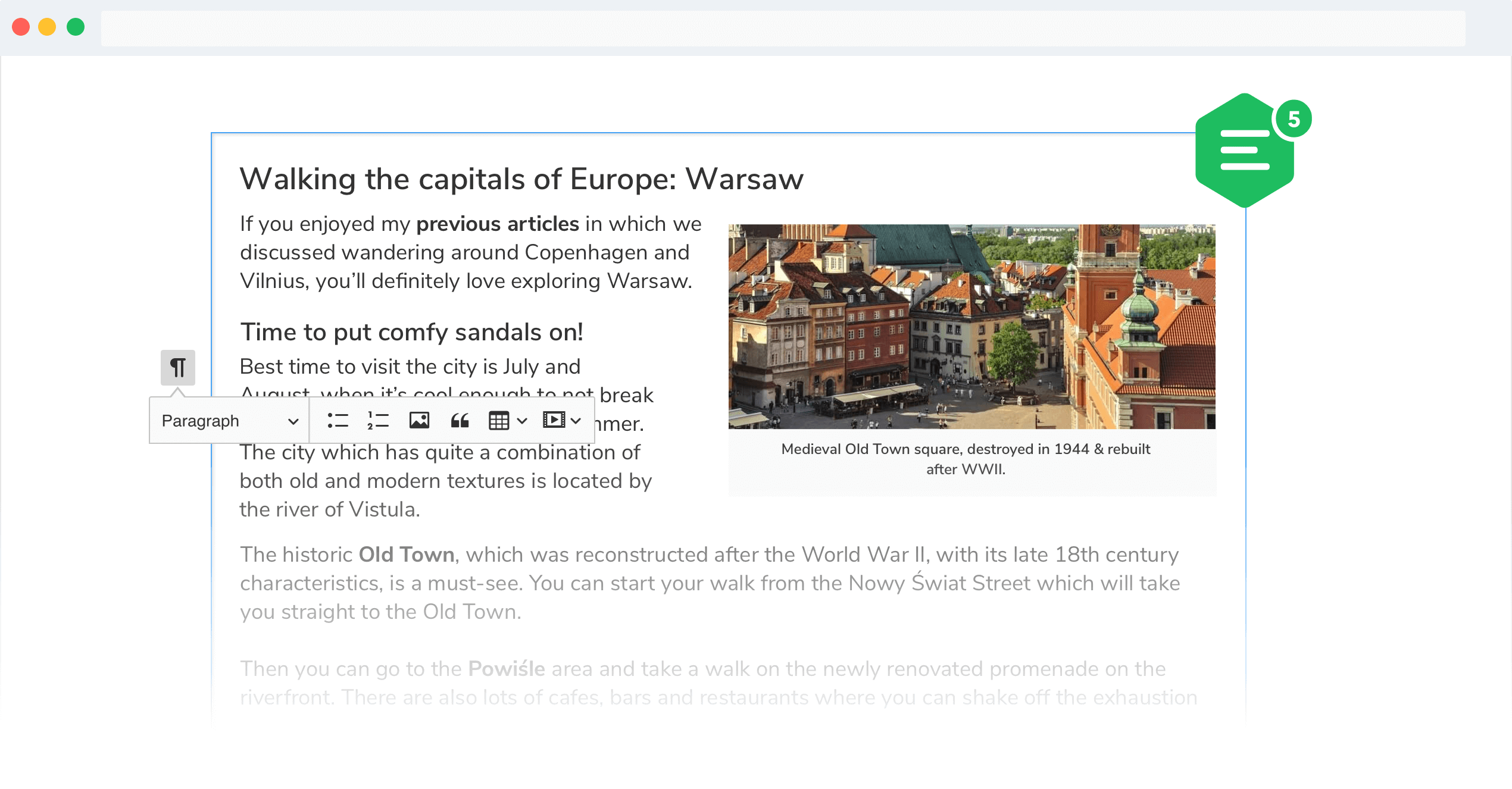
The balloon editor build for CKEditor 5. Read more about the balloon editor build and see the demo.
Documentation
See:
- Installation for how to install this package and what it contains.
- Basic API for how to create an editor and interact with it.
- Configuration for how to configure the editor.
- Creating custom builds for how to customize the build (configure and rebuild the editor bundle).
Quick start
First, install the build from npm:
npm install --save @ckeditor/ckeditor5-build-balloon-block
And use it in your website:
<div id="editor">
	<p>This is the editor content.</p>
</div>
<script src="./node_modules/@ckeditor/ckeditor5-build-balloon-block/build/ckeditor.js"></script>
<script>
	BalloonBlockEditor
		.create( document.querySelector( '#editor' ) )
		.then( editor => {
			window.editor = editor;
		} )
		.catch( err => {
			console.error( err.stack );
		} );
</script>
Or in your JavaScript application:
import BalloonEditor from '@ckeditor/ckeditor5-build-balloon-block';

// Or using the CommonJS version:
// const BalloonBlockEditor = require( '@ckeditor/ckeditor5-build-balloon-block' );

BalloonBlockEditor
	.create( document.querySelector( '#editor' ) )
	.then( editor => {
		window.editor = editor;
	} )
	.catch( err => {
		console.error( err.stack );
	} );
Note: If you are planning to integrate CKEditor 5 deep into your application, it is actually more convenient and recommended to install and import the source modules directly (like it happens in ckeditor.js). Read more in the Advanced setup guide.
Note: We recommend to adjust the position of the block toolbar button using CSS (see the example below) to your liking. By default, the block toolbar button will be attached directly to the boundary of the editable content area.
<style>
	/* Give the block toolbar button some space, moving it a few pixels away from the editable area. */
	.ck.ck-block-toolbar-button {
		transform: translateX( -10px );
	}
</style>
License
Licensed under the terms of GNU General Public License Version 2 or later. For full details about the license, please check the LICENSE.md file.